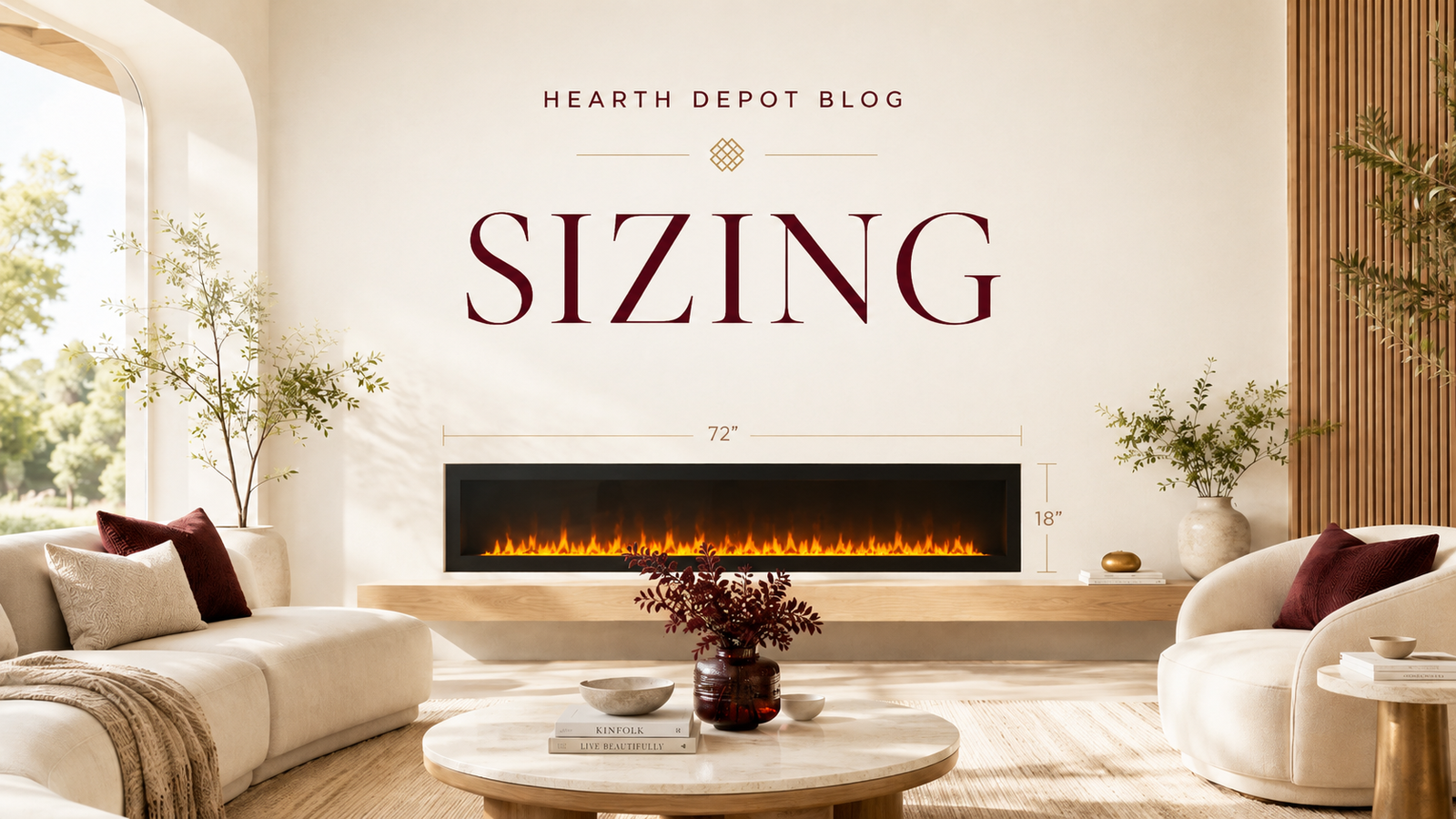

Hearth Depot · Feng Shui & Design Guide
Fireplaces and Feng Shui Bagua
How to balance the Fire element in every area of the home while creating a fireplace focal point that feels intentional, comfortable and beautifully designed.
A fireplace is more than a source of warmth or a decorative feature. It naturally attracts attention, creates movement and gives the room a strong visual center.
Within the traditional practice of Feng Shui, a fireplace is also one of the clearest representations of the Fire element. Fire is associated with visibility, expression, activity, warmth and transformation. Because it carries strong, active—or yang—energy, its position and surrounding materials are considered important when designing a balanced room.
The Bagua divides a floor plan or individual room into nine zones, each traditionally connected with a life theme and one of the five elements: Wood, Fire, Earth, Metal and Water.
Feng Shui is a cultural and philosophical design system rather than a scientifically proven method of changing health, relationships or financial outcomes. Its principles can still provide a useful framework for thinking about balance, proportion, movement and atmosphere in the home.
First, Choose the Bagua System You Are Using
Before deciding whether a fireplace is in the “right” area, it is important to understand that there are different ways of applying the Bagua.
In traditional Compass School Feng Shui, the Bagua is aligned with compass directions. The South area is connected with Fame and Reputation, the North with Career, the East with Family and the West with Creativity.
In Western or BTB Feng Shui, the Bagua grid is usually aligned with the main entrance. In this system, the Fame area is the rear-center section of the home or room when viewed from the entrance.
What Does a Fireplace Represent in Feng Shui?
A working wood or gas fireplace contains an actual flame, making it a direct expression of the Fire element.
An electric fireplace creates Fire energy in a more symbolic and controllable way through light, movement, warmth, color and rising flame shapes.
- Visibility and recognition
- Warmth and social connection
- Passion and expression
- Activity and motivation
- Transformation and movement
More Fire is not always better. A fireplace may feel inviting and energizing in one room, while an overly bright flame, strong red palette and excessive lighting could make another space feel restless.
The objective is not to maximize Fire. It is to balance it with the elements already present in the room.
Is the South the Best Location for a Fireplace?
In Compass School Feng Shui, the South is governed by the Fire element and associated with Fame, Recognition and how a person is perceived by others. For this reason, a fireplace in the southern part of the home is generally considered naturally compatible with the sector.
A fireplace in the South may be supported with elements traditionally associated with Wood because Wood feeds Fire within the five-element productive cycle.
- Natural wood paneling
- Green plants
- Vertical lines
- Warm lighting
- Burgundy or restrained red accents
- Expressive artwork
Avoid surrounding the fireplace with too many bright-red objects, intense lighting and highly reflective surfaces. Even in a Fire area, the room should still feel comfortable rather than overstimulating.
Fireplace Feng Shui in Each Bagua Area
A fireplace cannot always be moved. In many homes, its position is determined by architecture, venting, wiring or an existing chimney.
A fireplace in a less traditionally compatible Bagua area is not automatically a problem. Feng Shui-inspired design generally focuses on creating balance around the existing feature.
Fame and Reputation
The South is the most natural Bagua area for a fireplace because the sector and the fireplace share the Fire element.
Use natural wood, warm neutrals and restrained burgundy or red accents. A linear electric fireplace surrounded by plaster, pale stone or dark wood can create a sophisticated version of the traditional Fire element.
Wealth and Abundance
Wood supports Fire, but an exceptionally strong fireplace may symbolically consume too much of the Wood element.
Balance the fireplace with healthy plants, green accents, natural wood and vertical forms. Avoid making the entire area red, orange or intensely illuminated.
Family and New Beginnings
A fireplace may create a lively family gathering place, but the surrounding design should continue to support Wood.
Use wood furniture, green or blue-green textiles, botanical artwork, rounded-leaf plants and natural fibers.
Relationships and Partnership
Fire creates Earth within the productive cycle, so a fireplace may feel supportive here when designed with warmth and restraint.
Use pairs of objects, comfortable seating, stone, ceramic, beige, sand, terracotta and soft blush tones.
Knowledge and Personal Growth
This sector is traditionally associated with reflection, learning and inner development.
Choose a slower flame effect, natural logs, low brightness and grounding materials such as limestone, travertine, ceramic or textured plaster.
Health and Overall Balance
A centrally positioned fireplace can become a powerful architectural heart of the home, especially when it is visible from several areas.
Keep pathways open and avoid surrounding the fireplace with too much furniture or decoration. A see-through fireplace can define spaces without fully blocking movement.
Creativity and Children
Fire is traditionally considered to control Metal, so an Earth element can be used as a visual bridge.
Pale stone, ceramic, porcelain, cream, beige, soft yellow and rounded forms can soften the relationship.
Helpful People and Travel
The same balancing principle used in the West can be applied here.
Surround the fireplace with stone, ceramic, soft earth tones and selected metal accents rather than an overwhelming amount of red.
Career and Life Path
The North creates the clearest symbolic contrast because the sector is associated with Water while the fireplace represents Fire.
Use wood paneling, green accents, plants, timber furniture and a restrained flame setting as a visual bridge. Small amounts of dark blue or black can remain away from the fire opening.
Electric Versus Gas Fireplaces in Feng Shui
A gas fireplace contains a real flame and may therefore be interpreted as a stronger expression of the Fire element.
An electric fireplace offers more control. Homeowners can often adjust flame brightness, speed and color, and many models allow the visual flame effect to operate without heat.
Large Southern Living Room
Use a bright, warm flame where strong Fire energy feels naturally compatible with the room.
Northeast Reading Area
Select a softer amber flame, lower brightness and more grounding materials.
North-Facing Room
Moderate the flame brightness and connect the fireplace with wood, plants and green accents.
Year-Round Atmosphere
Use flame-only mode when additional heat is unnecessary but the room still benefits from movement and light.
A Dimplex built-in fireplace can suit traditional and transitional rooms, while a Touchstone Sideline Elite linear fireplace can complement modern feature walls. Direct vent gas fireplaces from Majestic, Empire and Napoleon may suit homeowners who prefer an authentic gas flame and stronger heating performance.
What About a See-Through Fireplace?
A see-through fireplace can connect two rooms or divide an open-plan space without creating a solid visual barrier.
From a Bagua perspective, it may influence more than one zone. One side could face the living room while the other faces the dining room, entrance or another seating area.
- Consistent materials on both sides
- Open pathways around the feature
- Comfortable seating in each viewing area
- Similar lighting temperatures
- Restrained Fire colors
- Stone or wood linking both zones
The objective is to make the fireplace feel like an intentional architectural connection rather than a visual interruption.
How to Arrange Living-Room Furniture Around the Fireplace
Feng Shui-inspired living-room design often emphasizes clear movement, supportive seating and the ability to see the entrance from the main sofa.
- Place the main sofa against a solid wall where possible.
- Allow seated people to see the room entrance without sitting directly in the doorway’s path.
- Keep circulation routes clear.
- Avoid placing every piece of furniture in one rigid line facing the fireplace.
- Add armchairs at an angle to encourage conversation.
- Use a rug to visually connect the seating group.
- Leave enough space between the fireplace and furniture for comfort and safety.
Always follow manufacturer instructions, combustible-material clearances and local building requirements. Feng Shui preferences should never override fire safety.
Can You Place a Television Above the Fireplace?
A television and fireplace both create strong visual activity. The fireplace brings flame movement and light, while the television adds changing imagery, sound and another dark rectangular form.
Placing them together is not automatically wrong, but the combination may become visually intense.
- Use a neutral stone or plaster surround
- Keep shelves uncluttered
- Avoid excessive red lighting
- Choose a fireplace wider than the TV where proportions allow
- Use an art-display screen when switched off
- Consider an adjacent wall instead
When a television is not necessary above the fireplace, artwork or a mirror can create a quieter focal wall.
Should a Mirror Be Placed Above a Fireplace?
Mirrors are often associated with the Water element because of their reflective quality. Some Feng Shui practitioners use a mirror to visually soften strong Fire energy, while others prefer not to create an obvious Water-and-Fire contrast.
There is no single rule shared by every Feng Shui school.
- Reflects natural light or an attractive view
- Is proportionate to the fireplace
- Does not reflect clutter
- Is securely installed
- Meets manufacturer clearance requirements
Choose a mirror because it improves the room’s light, scale and composition—not because it is presented as a guaranteed Feng Shui cure.
Common Fireplace Feng Shui Mistakes
Allowing the Mantel to Become Cluttered
Choose a few meaningful items and leave enough open space around them.
Ignoring the Fireplace When It Is Not Used
Keep the glass, logs, crystals and surrounding materials clean and visually maintained.
Using Too Much Red
The fireplace already represents Fire. Warm neutrals, natural wood and stone give the flame room to stand out.
Blocking Movement Around the Hearth
Do not place furniture or decorations where they make the fireplace area difficult to approach or move around.
Treating Every Rule as Absolute
The architecture, function, comfort and safety of the home should remain the priority.
Creating a Balanced Fireplace Focal Point
A successful fireplace wall should feel powerful without overwhelming the rest of the room.
Begin with the fireplace and then introduce materials that create balance.
- Wood: paneling, furniture and plants
- Earth: stone, plaster, ceramic and warm neutrals
- Metal: frames, lighting and subtle hardware
- Water: dark accents, glass and reflective surfaces
- Fire: flame, lighting and selected warm colors
A balanced room does not need equal amounts of every element. It needs a combination that feels intentional.
Find the Right Fireplace at Hearth Depot
Whether your Bagua plan calls for a strong Fire focal point or a softer, more controlled flame effect, the fireplace should still meet the practical requirements of your home.
Hearth Depot offers carefully selected electric fireplaces, linear models, built-in fireboxes, see-through fireplaces and direct vent gas fireplaces from trusted manufacturers.
- Linear Electric Fireplaces
- Built-In Fireboxes
- See-Through Fireplaces
- Direct Vent Gas Fireplaces
- Traditional Inserts
- Outdoor Fire Features
Customers can receive real human support when comparing fireplace dimensions, installation options, flame appearance, heating expectations, wall proportions and traditional versus modern styles.
Frequently Asked Questions
Which Bagua area is best for a fireplace?
In Compass School Feng Shui, the South is associated with the Fire element and Fame and Reputation, making it the most naturally compatible area for a fireplace. In entrance-based BTB Feng Shui, this is usually the rear-center part of the home or room.
Is a fireplace in the North bad Feng Shui?
Not necessarily. The North is associated with Water, which contrasts with Fire, but Wood materials, plants and green accents can be used as a visual bridge. An existing fireplace does not need to be removed.
Does an electric fireplace count as the Fire element?
In modern Feng Shui-inspired interiors, an electric fireplace can symbolically represent Fire through its flame imagery, light, movement and heat. A gas or wood fireplace contains an actual flame and may be interpreted as a stronger Fire expression.
Can a fireplace improve wealth or relationships?
Feng Shui tradition connects different Bagua areas with life themes, but there is no scientific evidence that fireplace placement directly changes wealth, health or relationships. Use the Bagua as a design and reflection tool rather than a guarantee.
Is a mirror above a fireplace good Feng Shui?
Opinions differ between practitioners. A mirror may visually soften strong Fire energy, but it should primarily be selected based on proportion, reflection, safety and the overall room design.
Can I place a television above an electric fireplace?
It may be possible when the fireplace manufacturer permits it and all installation clearances are followed. From a design perspective, keep the surrounding wall restrained so the combination does not become visually overwhelming.
Where can I find help choosing a fireplace?
Hearth Depot offers real human support to help customers compare fireplace sizes, flame styles, installation types and heating needs before ordering online.
Shopify note: confirm the three collection URLs before publishing. The clickable table of contents and FAQ accordions work automatically.